01
Research
Examining the existing reporting process, then gathering passenger perspectives through an online survey and two interviews with people from Bag+Support’s customer register.

University Project · 2024
How can reporting damaged luggage become faster, simpler and less dependent on manual airport processes?
My Role
UX/UI Designer
Team
1 UX Design Student
Company
Samsonite
Institution
University of Skövde
01 · Overview
As part of my Bachelor's studies in User Experience Design, I worked independently as a UX/UI Designer on a collaborative project with Bag+Support and Samsonite. Based on real user insights and industry context, I developed a concept for a digital self-service system for reporting damaged luggage. The concept combines baggage scanning with a guided digital interface at the airport, with the aim of reducing waiting times, repetitive data entry and reliance on manual handling. The project remained conceptual and was not implemented as a final product.
02 · The Challenge
The existing process for reporting damaged luggage is fragmented, time-consuming and dependent on airport staff availability. Passengers may need to queue at baggage claim, report the damage manually, receive a paper document and later re-enter the same information on a separate platform. This creates unnecessary repetition and delays for passengers while adding manual work for airport and customer service staff.
03 · Process
01
Examining the existing reporting process, then gathering passenger perspectives through an online survey and two interviews with people from Bag+Support’s customer register.
02
Turning research findings into goals for clearer instructions, shorter waiting times and a reporting flow that requires less manual input.
03
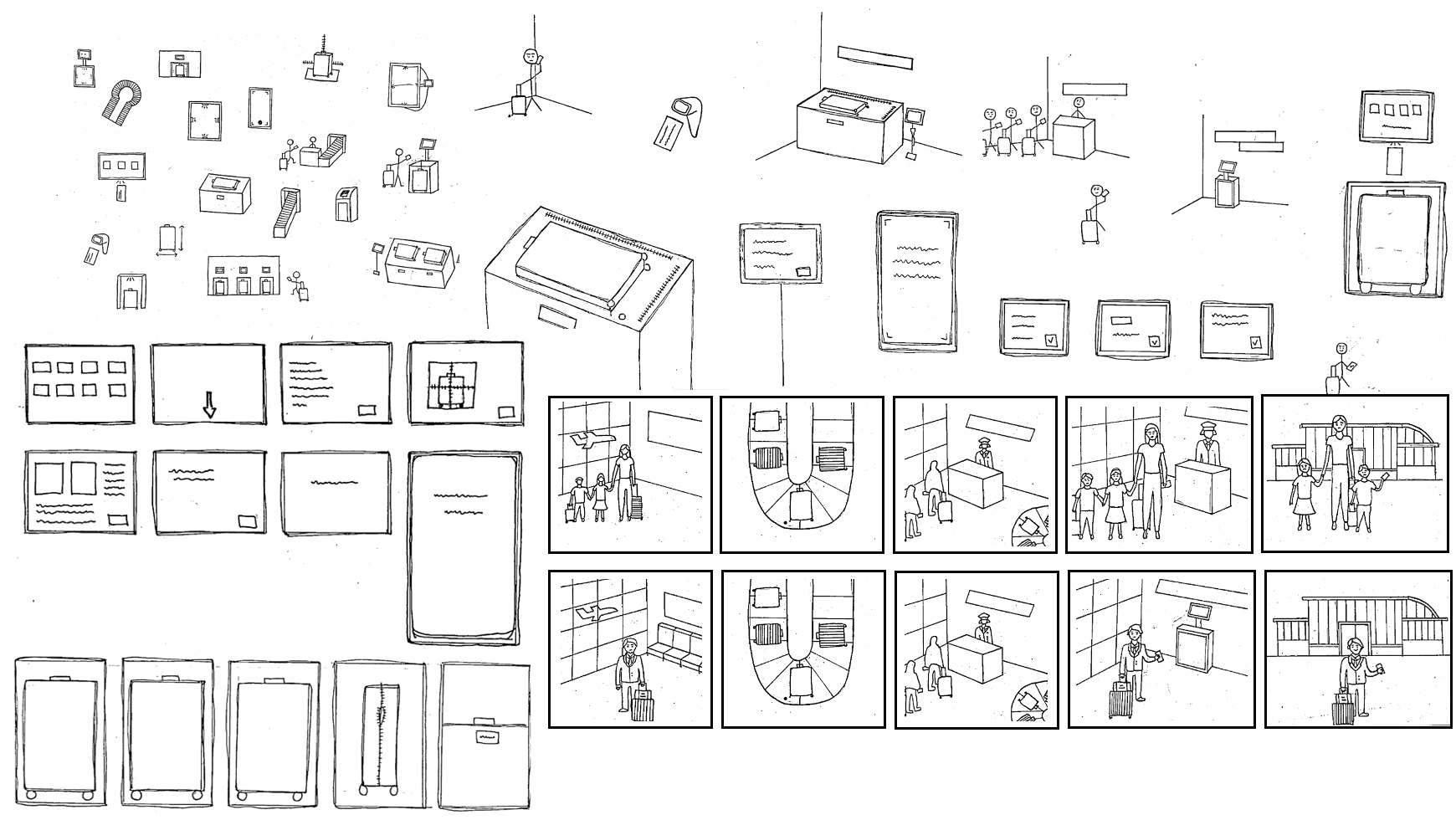
Sketching different ways to capture baggage information and using storyboards to compare the existing experience with a proposed self-service journey.
04
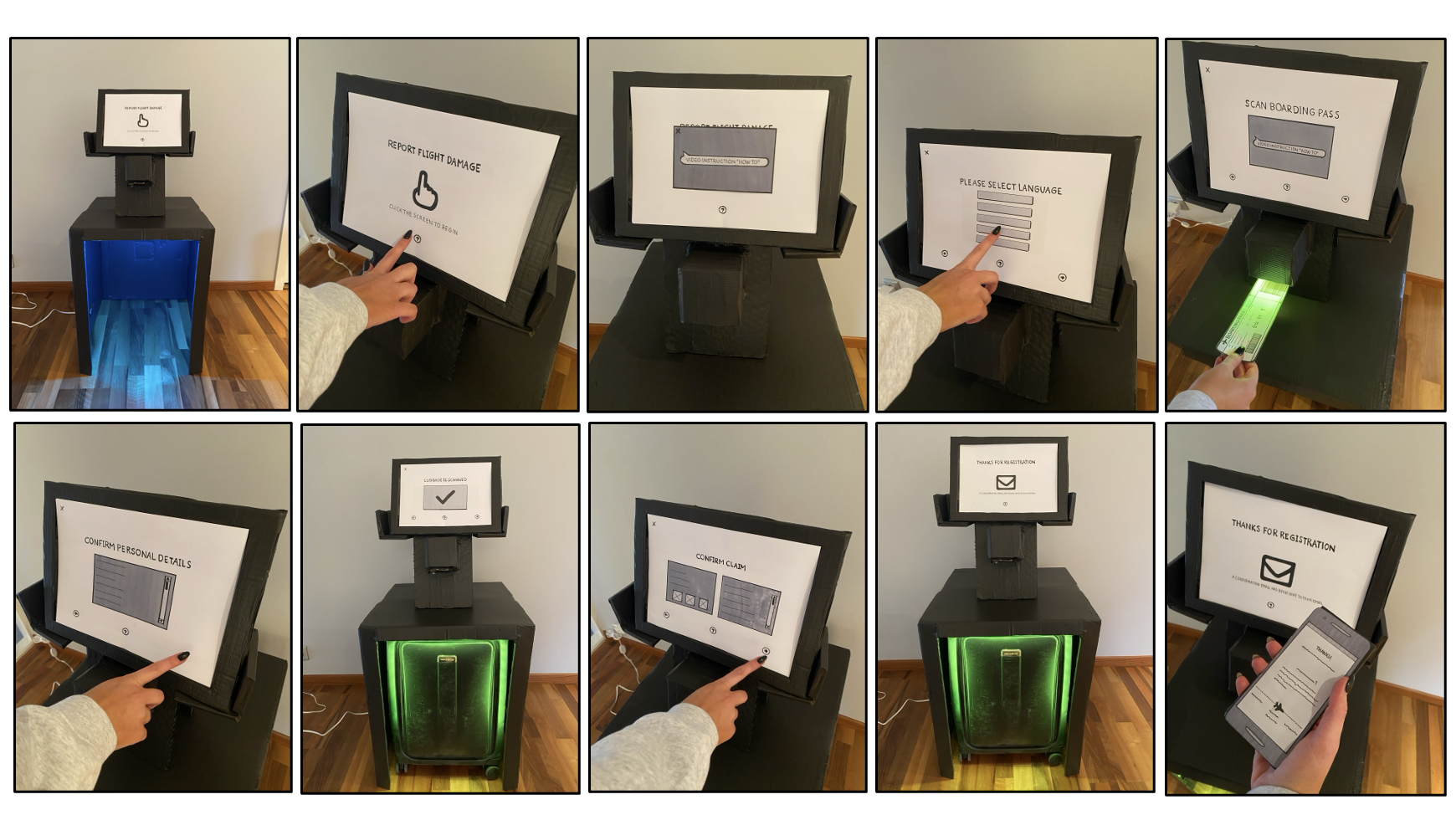
Building paper screens and a cardboard scanner model to work through the physical and digital steps, then developing wireframes in Balsamiq and an interactive screen prototype in Figma.
04 · Visuals
Early sketches and storyboards exploring the existing reporting experience and a new self-service journey.
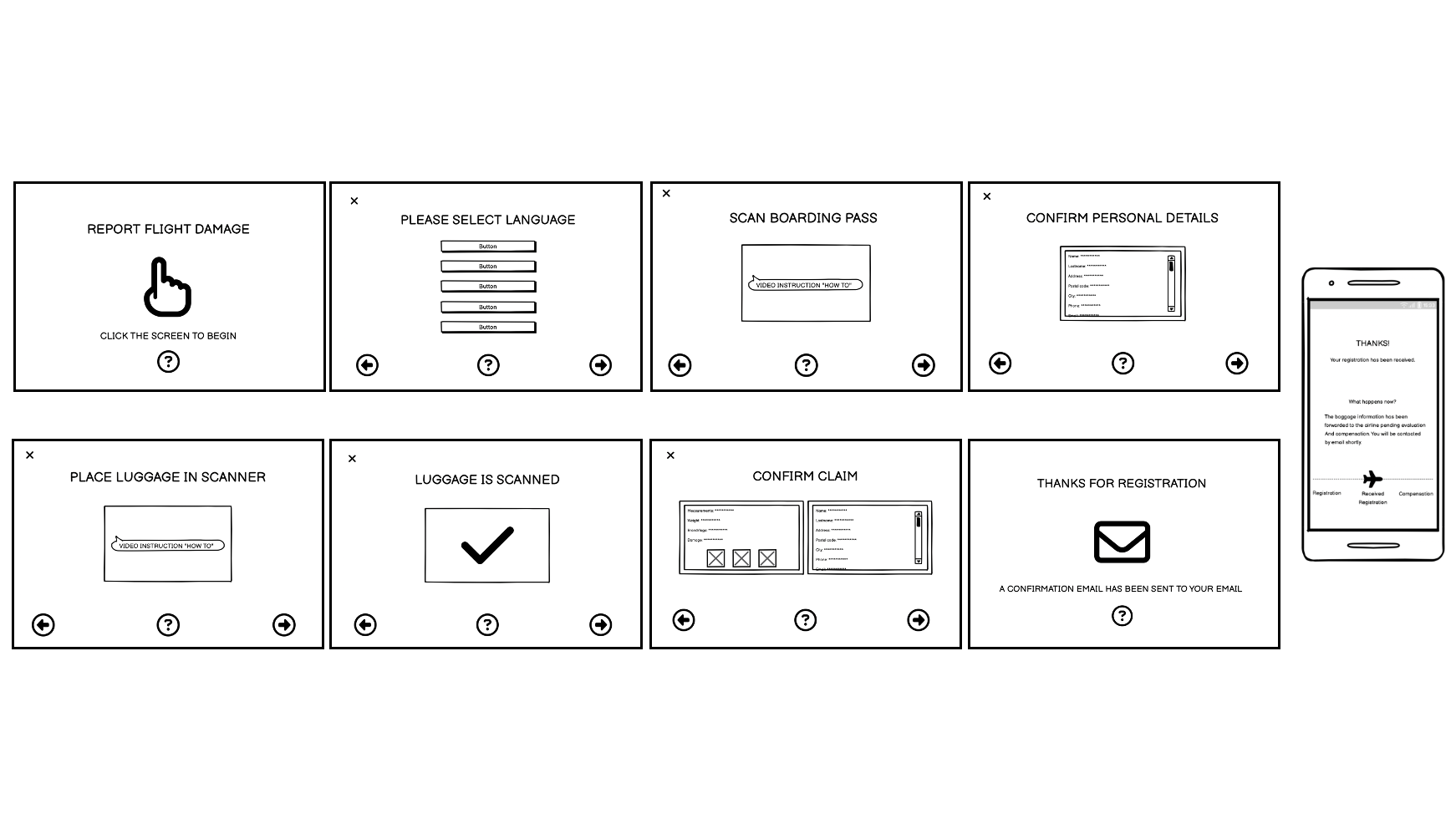
Low-fidelity wireframes created in Balsamiq to explore layout, structure and the step-by-step reporting flow.
A low-fidelity prototype exploring how passengers could move between physical and digital interactions.
05 · Reflection
This project strengthened my understanding of end-to-end experience design. Mapping the full reporting journey revealed that much of the frustration came from repeated information and disconnected steps, reinforcing the importance of considering how data and interactions move across an entire service. Designing a concept that combined a physical scanner with a digital interface also showed me that UX extends beyond the screen. Real-world environments, physical interactions and system dependencies all shape how an experience needs to work.