iZiViD - AR Parenting Tool
Company: iZiViD
My Role: UX/UI Designer
Duration: Sep 2025 – Jan 2026
Project Overview
During my studies at Amsterdam University of Applied Sciences, I worked as a UX/UI Designer in collaboration with iZiViD. Together with a multidisciplinary team, we developed an AR-based, gamified video platform designed to strengthen the relationship between children and parents living apart. The concept focuses on creating meaningful and engaging shared experiences across distance, using technology as a bridge to support emotional connection, communication and presence between parent and child.
Problem
Children and parents who live apart often experience limited interaction in their daily lives. Existing communication tools often lack engagement and fail to support meaningful shared experiences, making it difficult to maintain strong emotional connections over distance.
Process
The project followed an iterative, user-centered design process combining research, collaboration and continuous validation:
- A Jira board was created in Atlassian Confluence to manage tasks, define workflows and plan sprints.
- User needs and project goals were defined using the MoSCoW method to prioritize features and ensure alignment with both user and business objectives.
- A storyboard was developed to visualize the user journey and key interaction scenarios between parent and child.
- UML and use case diagrams were created to map system interactions and define functional requirements.
- Early concepts were explored using Balsamiq to establish structure and layout without focusing on visual details.
- More detailed wireframes were developed to define interface layout and interaction patterns, enabling early usability testing.
- An interactive high-fidelity prototype was created to closely simulate the final product experience.
- The design was evaluated through A/B testing and assessed using usability best practices and Nielsen’s heuristics to ensure a user-friendly and effective interface.
Visuals
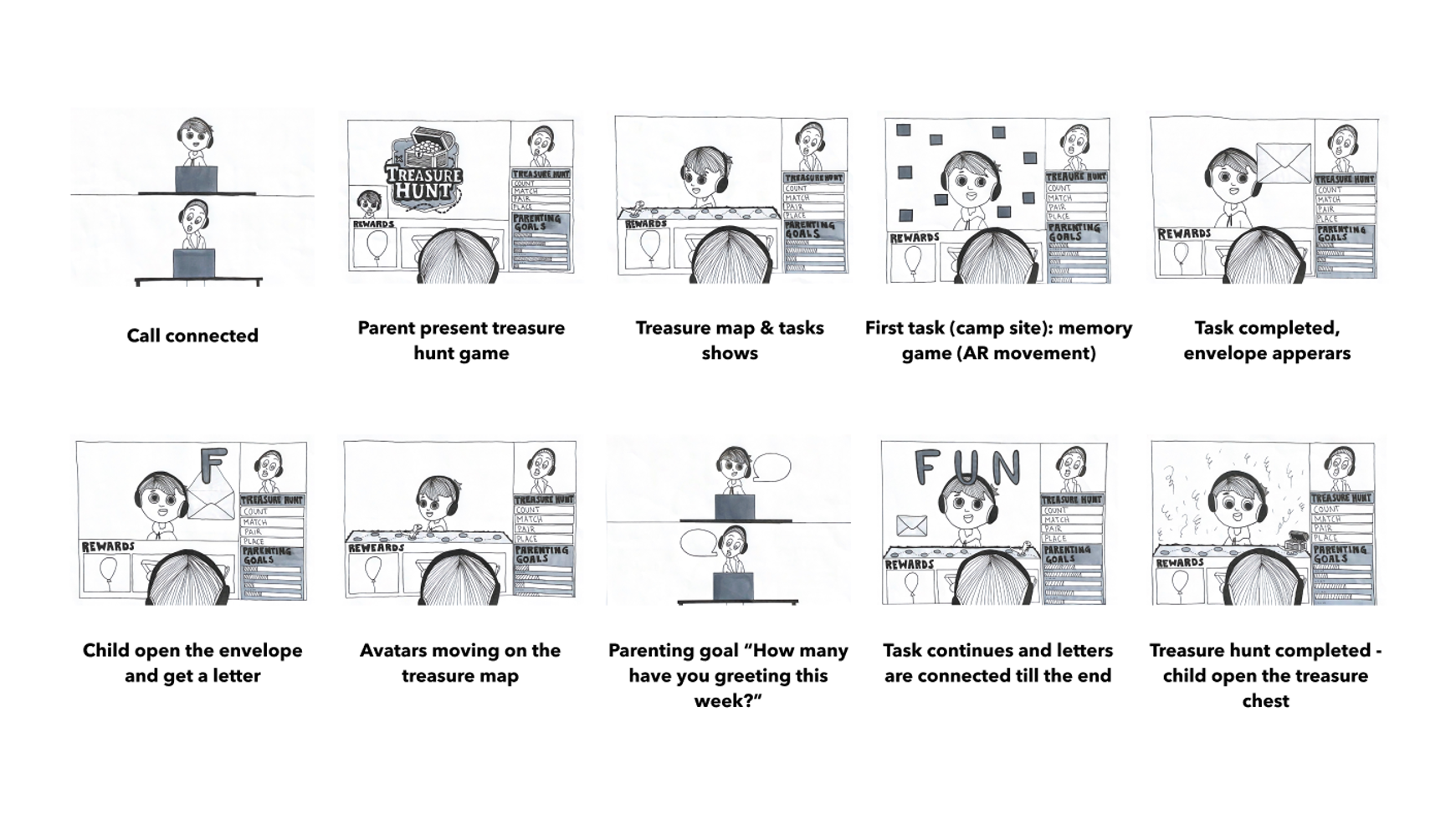
AR Experience Storyboard – User Journey Exploration.
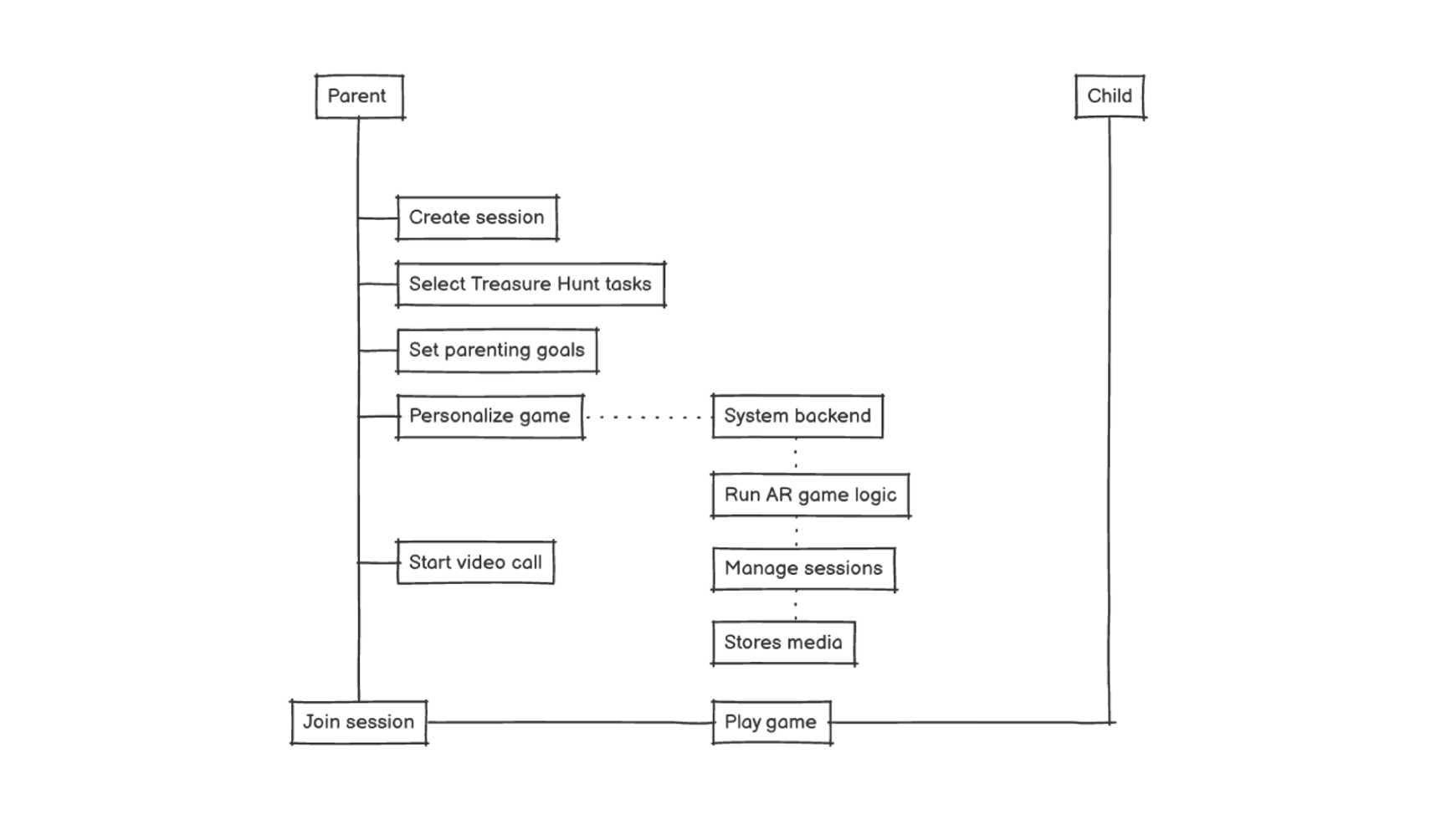
UML Diagram – Mapping User and System Interactions.
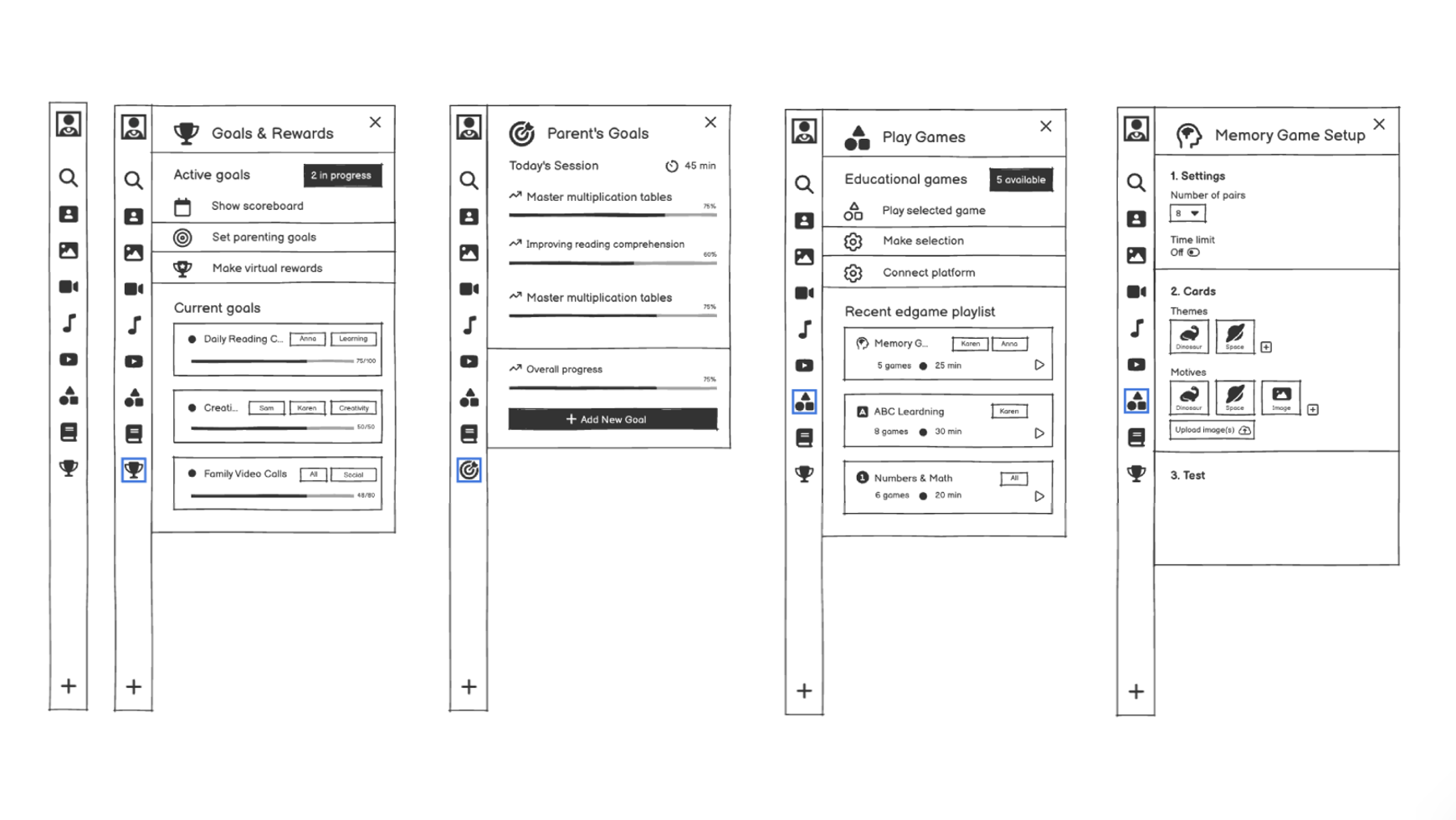
Lo-Fi Wireframe created in Balsamiq – Early Exploration of the User Flow.
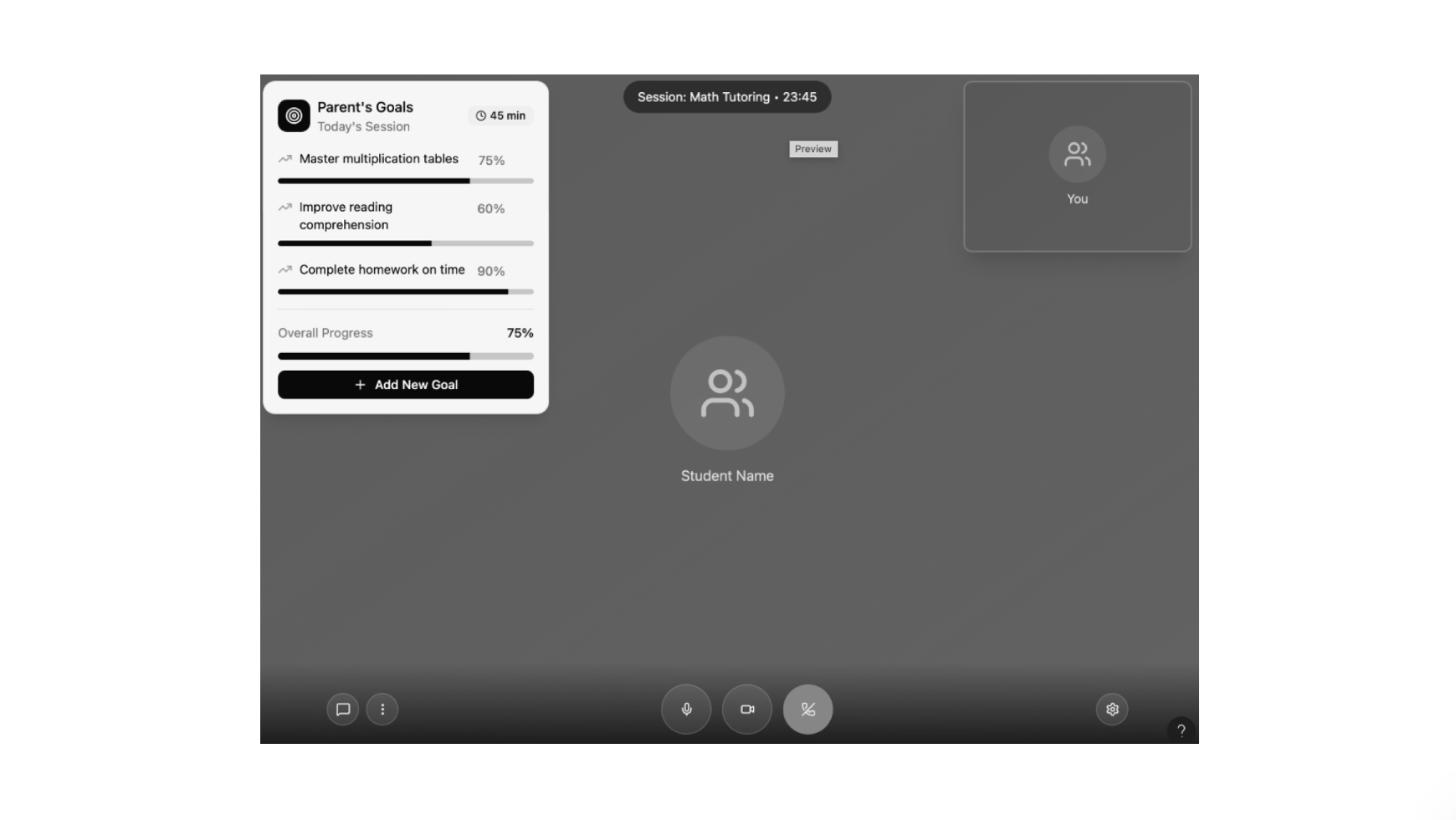
Mid-Fidelity Wireframe created in Figma – Video Session Interface.
High-Fidelity Prototype created in Figma – User Flow for Planning a Video Session.
Outcome
In collaboration with game developers, a software developer and a Business IT student, we delivered a parent-focused solution integrated into the iZiViD platform. The final concept uses augmented reality (AR) and goal-based gamification to encourage and reinforce positive behaviours in children during interactive video sessions with a parent at a distance. The project demonstrates how technology can go beyond simple communication, fostering emotional connection, increasing engagement and enabling meaningful shared experiences despite physical separation.
Key Learnings 💡
Designing for emotional connection: Working on parent–child interaction highlighted the importance of designing beyond functionality, focusing on emotional engagement and meaningful shared experiences.
Balancing play and purpose: Integrating gamification into a communication platform required careful balance between entertainment and meaningful interaction to ensure the experience felt engaging but still purposeful.
Complex systems need clear interaction design: Combining AR, video and gamification showed how important it is to design clear and intuitive interaction flows to avoid cognitive overload for both children and parents.
Collaboration drives better solutions: Working in a multidisciplinary team with developers and business students showed how early alignment and shared understanding can strengthen the design process.